The size guide — 5 min read
30, 50 or 100 ml: choosing your fragrance size
A large bottle may cost less by volume while adding an unnecessary expense. Use this framework to choose a size, then compare its delivered cost.
Read the guide ORYZIAHJOURNALPractical beauty guides, with a clear account of how we work.
Useful essentials
Start with the steps you already take. A sorting framework and a fictional example to keep useful products, identify duplicates and plan any missing purchases.
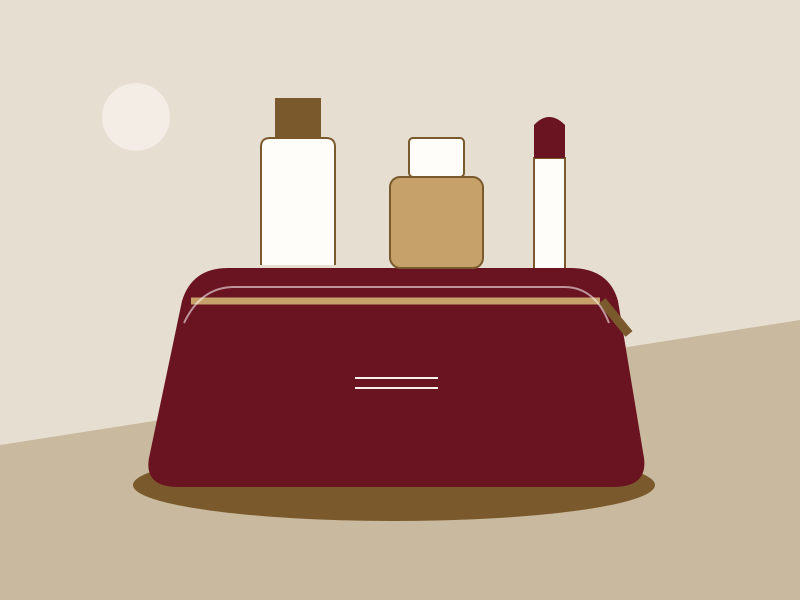
Put your makeup bag in front of you and choose three situations from your week: a rushed morning, a day when you want to wear more makeup, then an outing. Write down the steps you actually take in each. The result can be very short. The aim is a bag suited to your use and available space.
Do not start with a shopping list. First take stock of what you own, including accessories. A duplicate may be intentional, such as another shade; it simply needs a justified place rather than an automatic addition.
Assign a decision to each item. The “check” pile helps avoid keeping a product merely because you are used to it being there. The “possible purchase” pile remains a list of needs, not an order.
| Decision | Question to ask | Action |
|---|---|---|
| Keep within reach | Do I use it during my week? | Give it a place in the bag |
| Store separately | Is it reserved for another occasion? | Identify it without filling up the everyday bag |
| Check before use | Is the product information legible? | Reread the packaging and instructions |
| Consider buying | Which specific step is still impossible? | Write down the need and a budget before comparing |
In this fictional scenario, someone regularly uses a complexion product, a mascara and a lip colour. They own two accessories serving the same purpose and a palette reserved for some outings. Their everyday bag can hold the three products they use and their preferred accessory; the palette and second accessory are stored separately.
Someone else may choose a different combination or no makeup on some days. This example recommends neither a particular product nor an ideal number of items. It shows how to connect each space in the bag with a specific situation.
For products sold in the European Union, the French consumer authority DGCCRF explains labelling information, including contents, precautions and duration indications. The open-jar symbol gives a period after opening where applicable. Record the indications for your own product; this guide does not set one lifespan for all makeup.
Note the opening date when known and keep the information needed for use. If an indication is missing or no longer legible, ask the manufacturer for clarification. This exercise organises your makeup bag; it does not assess a product's safety.
If a gap remains, describe it before looking for a brand: category, shade or product name if known, desired size and total budget. When replacing an item, check its full designation; a set is not automatically equivalent to the product alone.
After your week, look at what you used, what you missed and what took up space without a reason. Change one thing at a time: remove a duplicate, move an occasional item or define a need more precisely. You will have a more concrete basis for your next purchase.
We do not infer from this exercise that a formula performs better, that a colour suits every skin tone or that one product replaces another. The intended result is an organised bag in which you can explain every choice.
Take stock, assign a role to each item and compare only purchases that fill a specific gap.
The size guide — 5 min read
A large bottle may cost less by volume while adding an unnecessary expense. Use this framework to choose a size, then compare its delivered cost.
Read the guideFragrance — 5 min read
Turn an appealing description into two or three scents to explore, then keep a record of the right version. A practical worksheet for yourself or a gift.
Read the guideThe gift set guide — 5 min read
A bottle, a body product, a travel size: a set brings together different things. List the contents and compare what you will use before paying extra.
Read the guideThe refill guide — 5 min read
“Refillable” describes a bottle; a “refill” is a presentation to identify. Gather the compatibility information before comparing the price.
Read the guide